Why I Don’t Record Healing Sessions
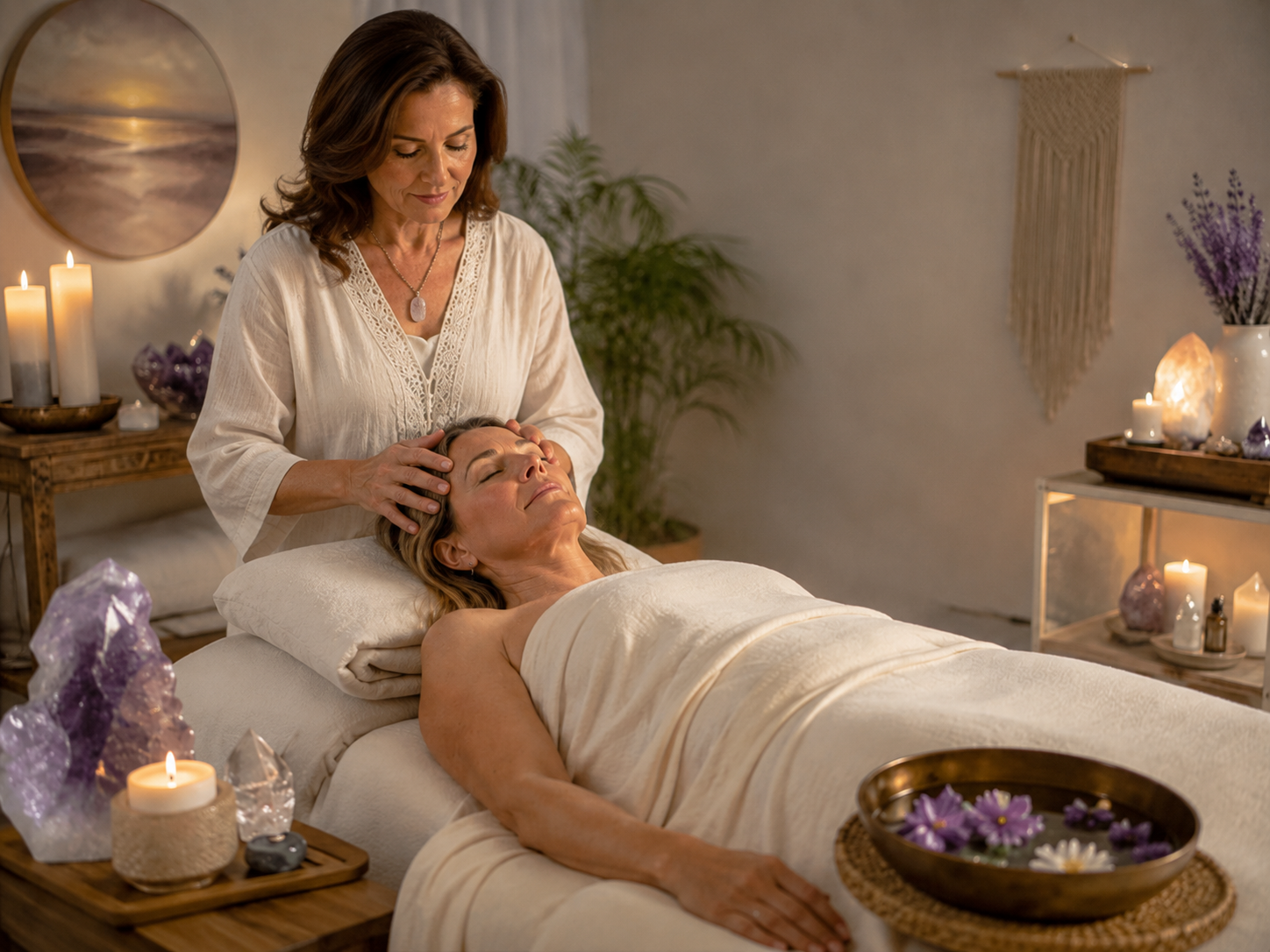
In a world where so much of life is photographed, recorded, posted, and shared, I have consciously chosen not to record the healing sessions I facilitate.
This is not because I have something to hide.
It is because I believe some experiences deserve to remain sacred.
When someone enters a healing space, they are often entering a deeply personal process of rest, reflection, release, reconnection, or inner exploration. They may become emotional. They may experience insights. They may simply become quiet enough to listen to themselves in a way they have not been able to for some time.
For me, that space deserves my complete presence.
It does not need an audience.
The Healing Space Is Not a Performance
The presence of a camera can subtly change an experience.
Even when everyone involved has agreed to being recorded, awareness of the camera can introduce another layer into the room:
How do I look?
What will people think?
Is something noticeable happening?
Should there be a visible reaction?
Suddenly, an experience that was meant to unfold naturally can begin to carry an element of observation or performance.
That is not the environment I want to create.
When I am working with someone, I want that individual to know that the session belongs to them.
There is nothing they need to demonstrate.
There is nothing they need to prove.
There is no reaction they need to produce.
They are free to simply receive, breathe, rest, feel, explore, and be present with whatever arises.
Sacredness Requires Space
There are moments in our lives that become meaningful precisely because they are not being documented.
They are experienced rather than captured.
Healing work can involve vulnerability. A person may release emotions they have carried for years. They may recognize something about themselves. They may experience stillness, grief, peace, clarity, resistance, remembrance, or simply deep relaxation.
Whatever occurs belongs first to the person experiencing it.
I believe protecting that intimacy is part of honoring the work.
For me, the healing room is a sacred container.
And sacred does not necessarily mean mysterious or secretive.
It means treated with reverence.
When Healing Becomes Content
I also pay close attention to the difference between educating people about healing work and turning someone's healing process into content.
Social media has created an environment where practitioners are often encouraged to show everything.
Record the breakthrough.
Capture the tears.
Film the reaction.
Post the transformation.
Demonstrate that the modality "works."
But I continually ask myself:
Who is this moment truly serving?
If someone's vulnerable experience is being recorded primarily so that I can advertise my services, strengthen my reputation, demonstrate effectiveness, or gain attention, then I have to examine whether the focus has shifted away from the person receiving the session.
That is where ego can quietly enter the room.
Not necessarily through arrogance, but through the desire to be seen as the person who created the transformation.
I do not believe healing needs to become a performance in order to have value.
I Am a Facilitator, Not the Source of Someone's Healing
Another reason I choose not to showcase healing sessions is because I do not view myself as the person who "heals" another human being.
My role is to facilitate a supportive environment.
I can bring my energy, training, presence, intention, experience, and the modalities I work with into that space. But each person's process remains their own.
Their body has its own intelligence.
Their consciousness has its own timing.
Their emotional and spiritual process belongs to them.
When meaningful changes occur, I do not need to claim ownership of them.
I can simply be grateful that I was trusted to hold space for part of the journey.
Privacy Is More Than Permission
Consent matters deeply to me.
But I also believe there is another question beyond:
"Did the person give permission to be recorded?"
The deeper question is:
"Does recording actually serve their healing experience?"
Those are not always the same thing.
Someone may agree to being filmed because they appreciate the practitioner, want to help the business, or do not want to say no.
For that reason, I prefer to remove the question entirely from the healing space.
There is no expectation that someone's session will become a testimonial, a demonstration, or a piece of marketing material.
The experience remains theirs.
Education Does Not Require Exposure
I absolutely believe in educating people about the modalities I offer.
I can explain Reiki.
I can discuss Akashic Records work.
I can talk about frequency, consciousness, meditation, self-awareness, relaxation, energy wellness, and the technologies available at Malena Energetics.
I can share photographs of the environment.
I can write educational articles.
I can answer questions.
And when clients independently choose to share their experiences, their words can be honored with their permission.
But I do not need to expose someone's most vulnerable moments in order to explain my work.
Education and transparency can coexist with privacy.
Some Things Are Meant to Be Experienced
We live in a time when documenting an experience can sometimes become more important than experiencing it.
I want the healing room to be different.
No audience.
No performance.
No expectation.
No need to create something visually impressive.
Just a person being given the space to reconnect with themselves.
For me, that is enough.
Perhaps the deepest work does not always need witnesses.
Perhaps some transformations are meant to happen quietly.
And perhaps honoring what remains unseen is one of the ways we restore sacredness to healing.
At Malena Energetics – A Temple of Light, I want every person who enters the space to know:
Your healing experience belongs to you.
My responsibility is not to capture it.
My responsibility is to honor the space in which it unfolds.
By: Maria Magdalena Jimenez